Getting started with a series on effective social media strategies for businesses
Especially in B2B marketing, companies often face uncertainty. Products are complex, target audiences are highly specific, and marketing budgets need to be spent as efficiently as possible. At the same time, platforms like LinkedIn, YouTube, and Instagram offer enormous opportunities to build visibility, strengthen trust, and gain new contacts.
This is exactly where social media campaigns come in. They ensure that communication consists not of individual, random posts, but of a clear strategy. Content, formats, and advertisements work together to pursue a concrete goal.
In this article, we provide a simple introduction to the topic. It serves as the kickoff to a series in which we will dive deeper into areas such as platform strategies, user behavior, and various campaign goals like recruiting, brand building, or lead generation.
Why social media is so valuable for technical companies
Technology and industrial companies often face a particular challenge. Their solutions are highly complex, while attention spans in the digital world tend to be short. That's where social media makes a difference. Complex topics can be broken down into smaller, easy-to-understand pieces of content. A short video can explain how a machine works, an infographic can highlight production benefits at a glance, and a customer success story can make the value of a solution tangible.
There are plenty of additional benefits:
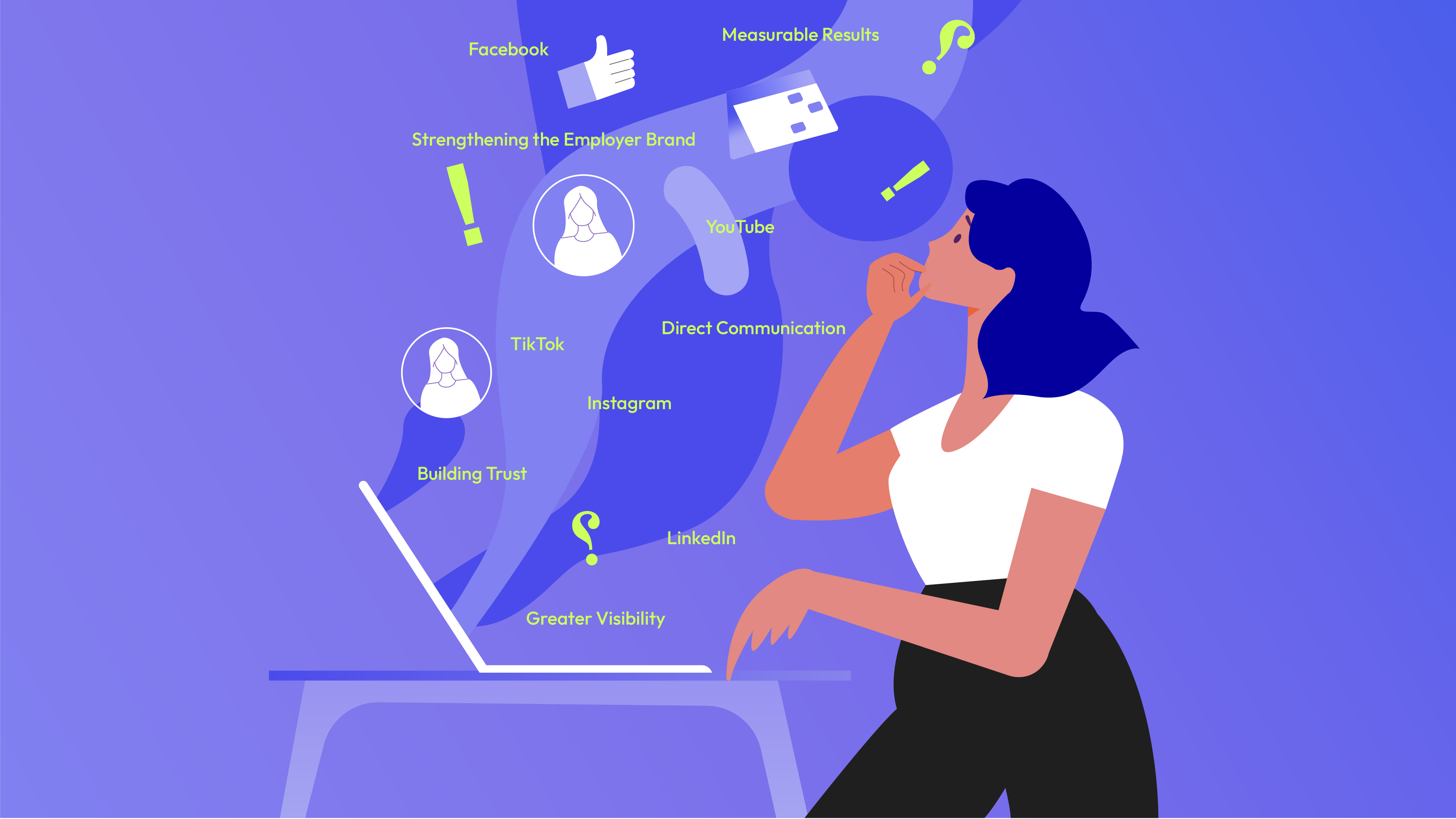
- Increased visibility among relevant target groups, including internationally
- Building trust through continuous expertise and insights
- Direct exchange with customers, partners, and prospects
- A stronger employer brand, as professionals increasingly discover companies through social media
- Measurable results, because reach, clicks, and leads can be analyzed
This makes social media an important part of corporate communication, sales, and recruiting.
The path to your own social media campaign
Successful campaigns may look effortless from the outside, but they're rarely created on the fly. In practice, a clear, step-by-step process helps turn ideas into results.
1. Define your goal
It all starts with a simple question: What do you want the campaign to achieve?
Typical goals include:
- increasing brand awareness for a company or product
- generating new sales leads
- positioning yourself as an expert in a specific field
- attracting qualified job applicants
The key is to make your objective as specific as possible. For example:
"Generate 50 qualified leads through LinkedIn within six weeks."
A clearly defined objective helps you align all content and activities with what you want to achieve.
2. Analyze your target audience
The next step is to define who the campaign is intended to reach. In a B2B context, this could be, for example:
- Production managers in the automotive industry
- Technical buyers in mechanical engineering
- Managing directors of mid-sized industrial companies
Equally important is the question of where these individuals are active and what issues occupy them. It is often helpful to create a so-called persona, which is a concrete profile of a typical representative of the target group. The clearer this picture is, the easier communication will be later on.
3. Develop a message and core idea
Once you've defined your objective and target audience, it's time to develop your message. It should communicate the value your company offers and serve as the foundation for all campaign content.
Effective messages are clear, relevant, and concise.
For example:
"Reduce production time by up to 20% with connected manufacturing solutions."
4. Determine content formats and channels
Now it is time to decide how the message will be conveyed. Different content is suitable for different platforms.
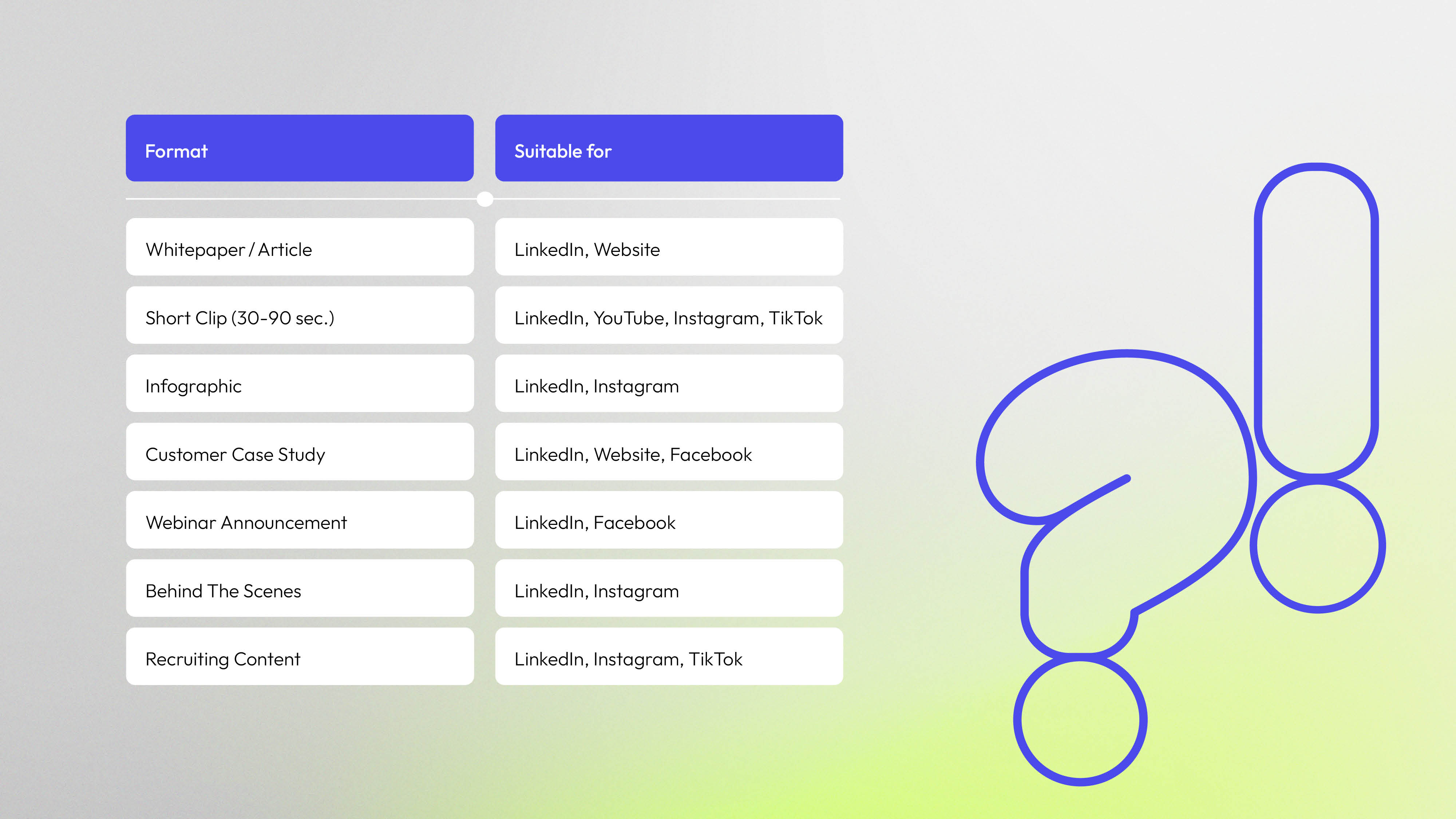
A strong campaign combines multiple formats, allowing you to approach the same topic from different angles and keep your audience engaged.
5. Create a Content Calendar
Turning individual ideas into a campaign takes structure. A content calendar helps you plan and coordinate your activities over time.
Typical elements include:
- Topic of the post
- Format (video, graphic, text)
- Channel
- Publication date
- Call to action, such as "Download the white paper" or "Register for the webinar"
A well-structured calendar ensures that your content builds on previous posts and follows a clear narrative.
6. Use Paid Advertising
In addition to organic posts, paid ads can help extend your reach. Platforms like LinkedIn offer highly targeted advertising options based on criteria such as:
- Industry
- Company size
- Job title
- Location
For example, a campaign can specifically target production managers in the automotive industry across German-speaking countries.
7. Set Up Tracking
Before launching your campaign, you need to know how you'll measure success.
This may include:
- Conversion tracking using platform tags
- UTM parameters for links
- Integration with a CRM system
With these foundations in place, you can identify which content and ads actually deliver results.
8. Launch and Actively Manage Your Campaign
Launching your campaign is just the beginning. Posts go live, ads start running, and conversations begin. Comments, questions, and discussions create valuable opportunities to engage with your audience.
At the same time, regularly monitoring ad performance allows you to make adjustments early and keep your campaign on track.
9. Analyze Results and Optimize
Once your campaign is running, it's time to evaluate the results. Ideally, this happens throughout the campaign, not just after it ends.
Key performance indicators include:
- Impressions
- Click-through rate
- Engagement
- Cost per click
- Leads generated
These metrics help you identify which content performs best and where there's room for improvement.
Just the Beginning
Successful social media campaigns don't happen by chance. They're built on clear objectives, a precise understanding of the target audience, and a structured approach.
But there's much more to explore than a single article can cover. That's why this is just the beginning of a new series.
In upcoming articles, we'll take a closer look at:
- Which platforms work best for different B2B objectives
- How user behavior differs between LinkedIn and Instagram
- How to use social media effectively for recruiting, lead generation, and brand building
- Which types of content work particularly well in technical industries
Ready to Take a More Strategic Approach to Social Media?
Many companies regularly publish content without having a clear campaign strategy behind it. And that's often where valuable opportunities are missed.
If you want to use social media more effectively to increase visibility, generate new business opportunities, or strengthen your employer brand, we're here to help you develop and implement a campaign strategy that fits your goals.