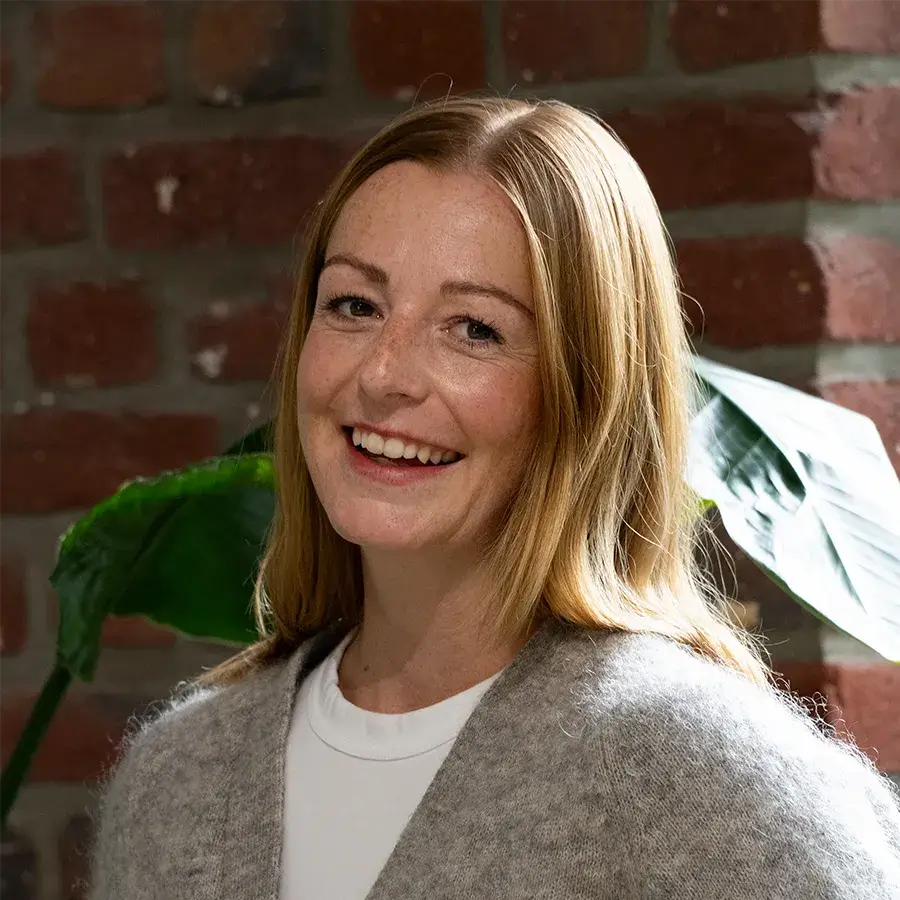
Silke, what was the catalyst that led you to choose the Ten More In leadership program?
I had been following the program closely for some time and had often planned to finally sign up. However, the timing never felt quite right. Even though the program officially runs for "only" six weeks, I set a high standard for myself: I wanted to fully grasp all the content, think it through, and apply it effectively. That requires a certain amount of time beyond the actual coaching sessions.
Ultimately, I came to the conclusion that there will probably never be an ideal time when you have infinite free capacity.
To answer your question: I kept finding myself in situations where I invested a lot of time and energy, but the results weren't always what I had hoped for. From the leadership program, I wanted to gain further input on structures and paths to self-responsibility, better understand how people behave, and learn to focus my energy more effectively. The incredible network of over 2,000 alumnae and additional learning resources, which you have lifetime access to after successfully completing the program, was obviously a major driver as well.
And I have to say: I wasn't disappointed. Not by the program with all its coaches, my Close Circle—with whom I still exchange ideas regularly—or the network of diverse, impressive women from every industry.
Every day, I continue to receive valuable insights, engage with amazing people, and am constantly impressed by how the principle of "sharing knowledge without expecting anything in return" is lived out here.
I have actually had the pleasure of sharing my knowledge with other women several times, and I’ve also had the great fortune of having women share their expertise with me.
It’s just a lot of fun because it’s true appreciation at every level. I wish this kind of interaction existed in other areas as well.
Was there a specific idea, model, or insight from the program that has permanently changed your perspective on leadership?
Honestly, not just one ;-). The first two weeks of the program felt a bit spiritual at first, and I wasn't sure if it was the right fit for me or where the journey would lead. It was about inner drivers and personal belief systems, which meant delving into our childhoods. At the beginning, I couldn't really place it and found it hard to understand why that was so important for the next steps. But it became clearer and clearer, and everything fell into place like a puzzle. Our belief systems stay with us our whole lives, influencing how we think, act, and feel. Every single day. Sometimes consciously, sometimes less so. They can be constructive or limiting. They aren't innate; they are learned (usually in childhood). Understanding these personal beliefs and reflecting on them is the foundation for personal change. That was a fundamental realization.
Identifying my own belief systems was extremely difficult for me, but the realization was all the more valuable.
Because it now allows me to recognize my behavioral patterns and change them when necessary. That is a very relevant lever for me. I now know my trigger points and can shape the space between stimulus and response myself. It’s also helpful to know that our brain functions like a pressure cooker under stress: our limbic system always works faster than our cognitive system in those situations. This means our rational thinking is temporarily switched off. It is all the more important to wait for that first moment before reacting clearly.
What concrete changes have you implemented in your daily work since the program—and what impact have you observed?
From week to week, I was able to integrate and implement more into my daily routine. That is what makes the program so incredibly valuable to me. It is applicable, whereas other programs often remain purely theoretical.
A good example is the topic of "subscriptions & memberships."
No, I don't mean a Spotify subscription or a gym membership here.
Every day, we enter into memberships and subscriptions with the people around us, whether we are consciously aware of it or not.
A brief explanation:
We all know the situation where we casually toss around pleasantries like "Hey, how's it going?" without actually expecting a concrete or meaningful answer. However, if we do get a more specific response than the usual "Yeah, good. You?"—for example, "Not so great. My pet is sick. I'm worried." (CAUTION: just an example!)—we often find ourselves head-first in a membership and the resulting subscription.
Because often, we don't take the freedom to decide: Do I want to or can I continue to talk about this topic with this person over the next few weeks? Do I want to or can I ask how the pet is doing every day? Or would I rather not? Not because I'm not interested in the other person or their challenges, but because in my role (note: professional context only), it might take up too much space, and I wouldn't be able to fulfill my role effectively.
Especially when I’m not making that decision once a day, but ten times.
I’ve realized that, up until now, I’ve accepted every membership and subscription that’s been offered to me. That’s not necessarily a bad thing, as I did it out of empathy and a genuine interest in the other person. But upon reflection, I’ve also noticed that it consumes time and energy that I—always from the perspective of my role as Head of Consulting—cannot and do not always want to spend. That might sound harsh at first. But in my view, it isn’t. It’s honest and sincere. When I commit to something, I do it properly and with all my energy. Not just as a passing remark. You can certainly be kind and still say "no." In my daily work, I notice how much space it suddenly gives me. Even if it’s not always easy to put into practice ;-)
As an agency, we work with people, brands, and diverse perspectives every day. Which leadership skill do you consider particularly important today—and why?
I’ve realized that we too often evaluate traits or behaviors by comparing them to ourselves. A hypothetical example: An employee works at a different pace than you do when getting things done, yet they complete projects just as well, or perhaps even better in the end. I often had the expectation that the employee should work as quickly as I would, perhaps losing sight of the actual result.
The realization that every employee functions differently because they bring their own unique drivers and beliefs was incredibly valuable for me and my daily work.
It has made me more relaxed in dealing with these situations and has given me a deep understanding that you cannot and should not project your own way of working onto others.
Another realization was that every strength also brings a weakness, and vice versa. Often, I was so taken by someone’s strengths—enthusiastic about everything they could do—that I failed to see that weaknesses are always part of the package and should be considered just as much.
Another example: Someone who is very creative and a free thinker will likely find it harder to work within rigid processes. Recognizing and accounting for this in others is incredibly important for placing the right people in the right roles. This is essential, especially when making hiring decisions.
If you could pass on one insight from the last six weeks to other leaders or aspiring leaders, what would it be?
Can it be more than one insight?
- Role clarity
Always be aware of which role you are acting in.
As a mother, friend, daughter, or in my case, as Head of Consulting.
This role clarity allows for a different and, above all, clearer scope of action.
- Questions as the most underrated leadership tool
Questions are a fundamental tool in leadership. They should be clear and completely free of judgment—not conveyed through tone of voice, facial expressions, or gestures.
Questions are a fantastic tool in many ways:
- they shift responsibility instead of taking it away
- they empower employees and identify where support is needed
- they provide security through active listening and reduce the fear of making mistakes
- they can de-escalate situations
- Avoid the subjunctive mood
Be clear and concise in your phrasing. No: would, should, could, might.
Only when I communicate clearly can I expect the corresponding result from the person I am speaking with.
- And finally: the stages of learning
Always be aware of which skills you already have and which ones you might not.
From unconscious or conscious incompetence to conscious or unconscious competence.
This realization is very helpful for self-awareness and personal development.
And one thing is clear: no one can do everything. That is why you have a great team of experts. That is extremely reassuring ;-) -
Joker: “The name Ten More In is based on the idea: If you have a seat at the table, open the door for ten more. What does this idea mean to you personally?”
Sharing knowledge has always been a great motivator for me. Not everyone has to learn everything themselves when you have access to amazing people with a wide range of skills and experience. Ten more in embodies this philosophy through and through. The most remarkable thing for me is that this always happens among the women in the network with a level of appreciation I have never experienced before. No one expects anything; everyone is ready to give. Completely without any ego. And that is simply wonderful.
Thank you so much for your honest (or: great) insights; we look forward to some exciting new perspectives. We're glad to have you on board!